Credentialing in medical billing is a vital process. It ensures healthcare providers are qualified and authorized to deliver services. This process involves verifying a provider’s qualifications, including education, training, and professional experience.
Provider enrollment and credentialing are essential for receiving reimbursement from insurance companies. Medical credentialing helps maintain high standards of care and patient safety. It is crucial for both individual practitioners and healthcare organizations.
A certified credentialing specialist certification can enhance a professional’s expertise. This certification is valuable in managing the credentialing process. Behavioral health credentialing services address the unique needs of mental health providers.
Credentialing services streamline the process and reduce administrative burdens. They help providers comply with specific regulations. Hospital vendor credentialing by state may vary, requiring compliance with local rules.
Healthcare provider credentialing is a continuous process. It requires regular updates and renewals. Understanding credentialing in healthcare is key to successful practice management.
What is Credentialing in Medical Billing?
Credentialing in medical billing is a verification process. It ensures that healthcare providers are qualified to offer services. This process confirms the provider’s credentials and professional standing.
The credentialing process involves multiple critical steps. It includes reviewing education, training, and past professional experience. Providers must also adhere to specific regulations and standards.
Insurance companies require credentialing before providers can join their networks. This ensures they meet required professional standards. Without proper credentialing, providers might face delays in reimbursement.
Key elements of credentialing include:
- Verification of education and degrees
- Assessment of training and certifications
- Scrutiny of work history and competence
Proper credentialing maintains trust and safety in healthcare. It protects patients and ensures high-quality care delivery. Credentialing reinforces the reliability and professionalism of healthcare services.
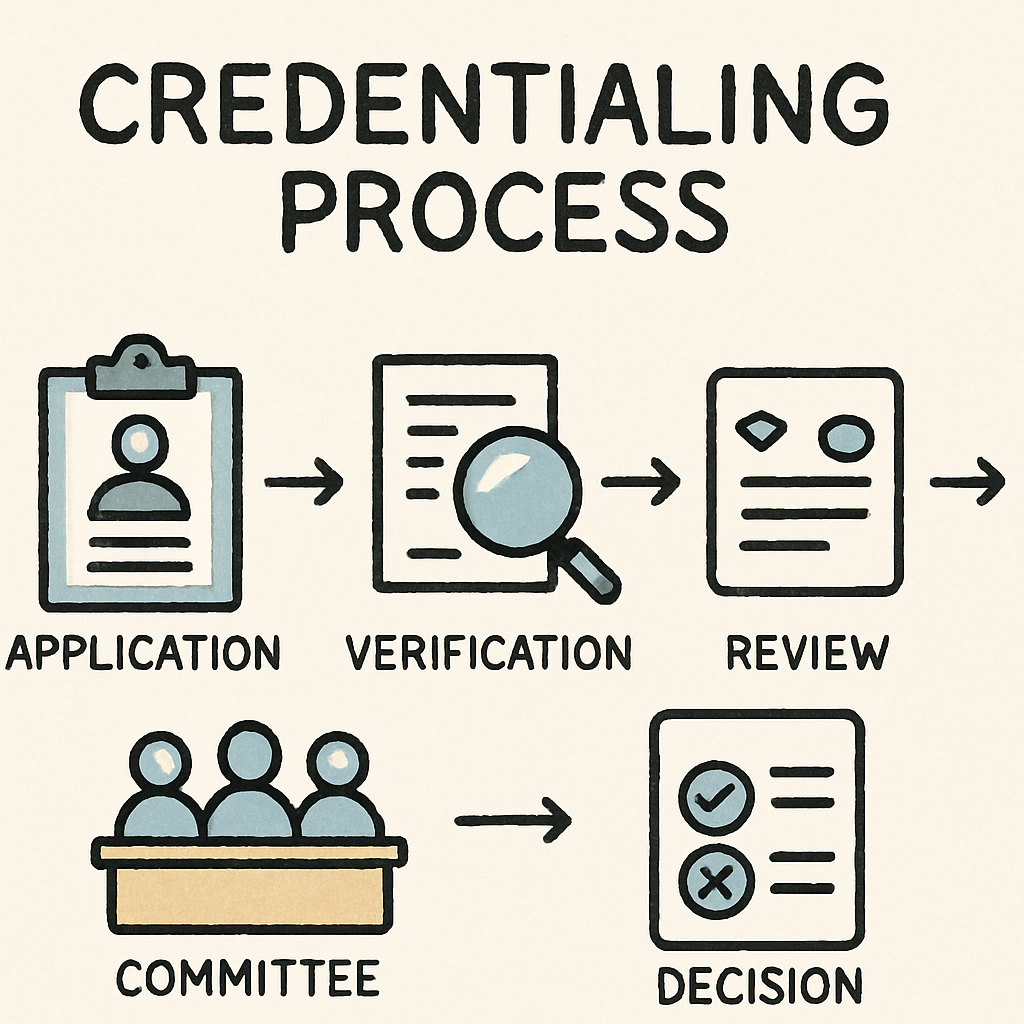
Through this process, healthcare facilities can assure patients of quality and vetted services. It also supports providers in achieving financial success by securing timely insurance payments.
Why is Credentialing Important in Healthcare?
Credentialing plays a crucial role in the healthcare industry. It acts as a safeguard for both patients and providers. Without it, trust in health services might wane.
Healthcare credentialing maintains the integrity and quality of care. It ensures that providers meet required standards and qualifications. This, in turn, fosters patient confidence and safety.
The credentialing process also supports financial aspects in healthcare. It allows providers to enroll in insurance networks and receive reimbursements. Without proper credentialing, these financial transactions face hurdles.
Key reasons credentialing is important include:
- Protecting patient safety
- Ensuring professional provider qualifications
- Facilitating provider payments from insurers
In essence, credentialing boosts the healthcare system’s reliability. It aligns with legal and ethical standards, enhancing the credibility of healthcare professionals and institutions. Overall, credentialing upholds the value of healthcare services.
The Credentialing Process: Step-by-Step
Credentialing involves several structured steps. Each step ensures that healthcare providers are qualified and authorized to offer services.
First, providers submit an application. This application includes personal and professional details necessary for verification. Accurate information is crucial to avoid delays.
Verification follows next. Credentialing specialists check qualifications like education and certifications. Professional experience is also validated during this phase.
Then, references are reviewed. This includes professional recommendations which confirm the provider’s competence. A thorough review process safeguards against errors.
Two critical lists in the process include:
- Documents Required for Application:
- Application Form
- Curriculum Vitae
- Professional Licenses
- Verification Checks:
- Educational Accreditation
- Work History Evaluation
- Criminal Background Check
Providers receive approval once all details are verified. This formal approval authorizes them to begin practice.
Maintaining an updated portfolio is key. Providers must regularly renew credentials to comply with regulations. This ensures continued eligibility for practice.

Consistency in the credentialing process aids healthcare quality. It establishes benchmarks that boost reliability and trust in healthcare providers.
Initial Credentialing vs. Re-Credentialing
Initial credentialing verifies a provider’s background for the first time. It’s foundational for practice authorization. Re-credentialing occurs periodically to ensure ongoing compliance and qualifications.
Key differences include:
- Initial credentialing is comprehensive; re-credentialing revisits previously verified data.
- Re-credentialing focuses on recent developments, renewals, and updates.
Routine re-credentialing maintains integrity and service quality.
Key Documents and Information Required
Credentialing requires specific documents and information. These elements are crucial for a comprehensive evaluation of a provider’s qualifications. Missing pieces can delay the process significantly.
Required items typically include:
- Identification Documents:
- Passport or ID
- Professional license
- Professional Background:
- Curriculum Vitae
- Previous Employment Verification
- Other Vital Documents:
- Malpractice Insurance
- Board Certifications
Compiling these documents accurately streamlines credentialing. It ensures a smooth transition through the credentialing pipeline. Thorough documentation underscores the provider’s dedication to maintaining quality standards.
Provider Enrollment and Credentialing: How They Work Together
Provider enrollment and credentialing are interconnected processes in healthcare administration. Each plays a distinct, yet complementary role in integrating providers into insurance networks.
Enrollment involves registering healthcare providers with payers. This registration enables them to receive reimbursements for services rendered. It’s a necessary step to ensure revenue flow for practices.
Credentialing, on the other hand, is all about verification. It ensures that the provider meets necessary qualifications and compliance standards. Together, these processes enable smooth interactions within healthcare systems.
Both processes share common goals, including:
- Ensuring provider qualifications meet insurance standards.
- Enabling accurate and timely reimbursements.
- Facilitating compliance with regulatory guidelines.

Proper execution of enrollment and credentialing optimizes revenue cycles. It assures healthcare providers can focus on delivering quality care instead of administrative hurdles. Understanding the synergy between these processes is vital for operational efficiency.
Types of Credentialing Services
Credentialing services come in various forms, tailored to different healthcare needs. Each service addresses specific provider requirements and regulatory demands.
- Standard Medical Credentialing: Essential for verifying qualifications and eligibility for insurance reimbursements.
- Insurance Credentialing: Focuses on aligning providers with insurers to ensure seamless claim processing.
Additional services include:
- Mental Health Credentialing: Specialized in meeting the unique needs of mental health providers.
- Credentialing for Group Practices: Ensures all practitioners within a practice adhere to required standards.

These services reduce administrative burdens by handling verification processes. This allows healthcare providers to direct their attention to patient care. Choosing the right credentialing service can lead to increased efficiency and compliance.
Behavioral Health Credentialing Services
Behavioral health credentialing services cater to mental health practitioners. These services ensure compliance with specialized requirements.
Key aspects include:
- Tailored verification processes for mental health credentials.
- Navigating complex payer landscapes specific to mental health.
Behavioral health services provide invaluable support. They facilitate smoother operations for mental health providers facing unique challenges.
Hospital Vendor Credentialing by State
Hospital vendor credentialing varies across states. Each state has unique regulations and requirements.
Critical considerations include:
- Compliance with state-specific healthcare laws.
- Registration and documentation tailored to state mandates.
Understanding these variations is crucial for vendors operating across different locations. State-specific credentialing ensures compliance and fosters trust among hospital administrators and vendors.
The Role of a Credentialing Specialist
Credentialing specialists play an essential role in healthcare operations. They ensure providers meet necessary standards and maintain compliance.
Their duties often include:
- Reviewing and processing credentialing applications.
- Verifying qualifications like education and training.
- Liaising with insurance companies and regulatory bodies.
These tasks require great attention to detail. Specialists facilitate the credentialing process, ensuring it’s efficient and accurate. They also keep providers informed about changes in credentialing requirements.

Credentialing specialists help prevent delays in provider enrollment. Their expertise is crucial for maintaining a practice’s credibility and financial health. Their role is vital for the seamless integration of providers into healthcare networks.
Certified Credentialing Specialist Certification
Obtaining a certified credentialing specialist certification enhances one’s expertise in the field. This certification validates a high level of proficiency and understanding of credentialing processes.
Steps to certification include:
- Completing educational courses specific to credentialing.
- Passing an examination to prove your skills and knowledge.
Certification opens up career advancement opportunities. It also builds trust among employers and providers, ensuring top-notch credentialing services.
Common Challenges and Mistakes in Credentialing
Credentialing can be complex and challenging. Mistakes often occur, impacting provider enrollment timelines and revenues. Identifying common pitfalls helps prevent issues.
Typical challenges include:
- Incomplete or inaccurate applications.
- Miscommunication with insurance companies.
- Delays in verification processes.
These problems can lead to denied enrollments or delays in reimbursements. Another common mistake is not keeping credentialing files updated, which jeopardizes re-credentialing efforts.
To avoid errors, consider:
- Performing regular audits of credentialing records.
- Establishing clear communication channels with payers.
- Setting up reminders for re-credentialing deadlines.
Credentialing specialists should receive adequate training. Understanding these common challenges allows healthcare providers to maintain efficient credentialing processes. Avoiding these mistakes ensures providers can focus more on patient care rather than administrative hurdles. Successful credentialing minimizes disruptions and supports financial health.
Best Practices for Successful Credentialing
Successful credentialing requires diligence and strategic planning. Adhering to best practices can streamline the process and minimize complications. Comprehensive preparation is key.
Implement these strategies:
- Maintain accurate and detailed records.
- Regularly update provider information.
- Clearly understand payer requirements.
Effective communication fosters smooth credentialing. Establishing strong relationships with credentialing partners and insurance payers is crucial. Address issues promptly to prevent setbacks.
Additional recommendations include:
- Use technology to track applications.
- Provide ongoing training for staff.
- Engage certified credentialing specialists.

Investing in these practices enhances efficiency and ensures compliance with regulations. By following these guidelines, healthcare providers can navigate credentialing challenges successfully. Ultimately, streamlined credentialing supports better service delivery and financial stability for medical practices.
How Credentialing Impacts Revenue Cycle Management
Credentialing directly affects revenue cycle management by influencing timely reimbursements. Proper credentialing ensures that healthcare providers are eligible to bill payers and receive payments without delays. Discrepancies in credentialing can lead to claim rejections or denials.
Key impacts on revenue cycle:
- Validates provider eligibility.
- Reduces payment delays.
- Minimizes claim denials.
Efficient credentialing streamlines billing operations, leading to consistent cash flow. By addressing credentialing issues proactively, healthcare organizations can maintain financial health and support sustainable growth. This proactive approach is crucial for ensuring seamless revenue cycles.
Choosing the Right Credentialing Services for Your Practice
Selecting the right credentialing services can significantly impact your practice’s efficiency. It’s important to evaluate the specific needs of your practice and choose a service that aligns with those requirements. Consider factors like specialization, cost, and support.
Considerations for choosing credentialing services:
- Specific needs of your practice
- Cost-effectiveness
- Level of support provided

A tailored service will streamline credentialing tasks, allowing you to focus more on patient care. Moreover, expert guidance from credentialing professionals can mitigate the risk of errors and optimize your practice’s operational success. Making an informed choice ensures that your credentialing processes are handled with care and precision.
Frequently Asked Questions about Credentialing in Medical Billing
Credentialing is often complex and can lead to many questions. Below, we address some common inquiries to help clarify the process.
What is credentialing in medical billing?
Credentialing ensures that providers meet necessary standards to deliver healthcare services.
How long does the credentialing process take?
It varies but typically ranges from a few weeks to several months.
Key factors affecting credentialing timeline:
- Completeness of documentation
- Cooperation from involved parties
What documents are needed?
Commonly required documents include diplomas, licenses, and proof of insurance.
Why is credentialing important for practices?
Proper credentialing is essential for receiving reimbursements and maintaining patient trust.
What role do credentialing specialists play?
They manage applications, verify information, and ensure compliance with standards.
How can providers stay compliant?
Regular updates and timely renewals ensure ongoing compliance with credentialing requirements.
Understanding these aspects empowers providers to successfully manage their credentialing processes.
Conclusion: The Value of Credentialing in Medical Billing
Credentialing in medical billing plays a vital role in healthcare operations. It ensures providers meet required standards and can receive insurance reimbursements.
By adhering to credentialing protocols, healthcare practices maintain their credibility and improve patient trust. This process is integral to achieving financial stability and ensuring high-quality care. Understanding and valuing credentialing can lead to more successful practice management and patient satisfaction.