In the world of healthcare, efficient billing processes are critical for maintaining financial stability. This is where Revenue Cycle Management (RCM) comes into play. RCM is not merely a back-office function but a strategic asset that can significantly influence a healthcare provider’s financial health and patient satisfaction. But what exactly is RCM, and how does it differ from traditional medical billing? Let’s delve into the intricacies of RCM and explore its significance in the healthcare industry.

Revenue Cycle Management, often abbreviated as RCM, refers to the financial process used by healthcare facilities to manage the administrative and clinical functions associated with claims processing, payment, and revenue generation. It’s a complex process that requires the coordination of various departments within a healthcare organization. The primary goal of RCM is to identify, collect, and manage the healthcare provider’s revenue from patients, ensuring that every service provided is accurately billed and paid for.
RCM is not just about managing finances; it is about creating a seamless experience that aligns with both operational efficiency and patient care. By integrating clinical and financial data, RCM helps healthcare providers make informed decisions that enhance both patient outcomes and financial performance. The result is a more sustainable and profitable healthcare organization that can continue to invest in quality care.
What Is the RCM Cycle in Medical Billing?
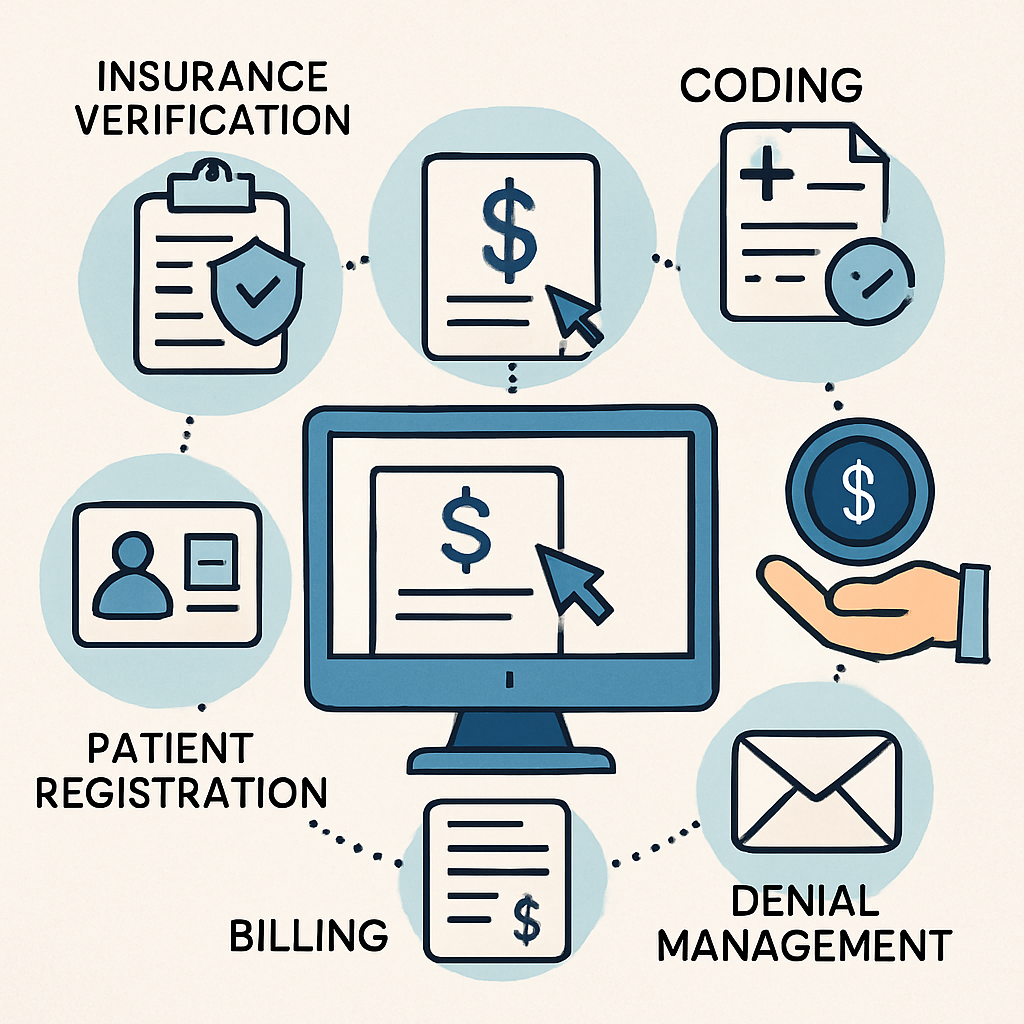
The RCM cycle is a comprehensive process that involves several critical steps. Each step is integral to ensuring that healthcare providers are compensated for their services, from the initial patient interaction to the final payment. The main phases include:
- Patient Registration: This step involves collecting and verifying patient information to ensure accurate billing. It sets the stage for a smooth billing process by capturing essential data right from the start.
- Insurance Verification: Confirming insurance coverage and eligibility is crucial to avoid claim denials later in the process. This step involves communicating with insurance companies to verify patient coverage and benefits.
- Service Documentation: Accurate recording of patient encounters and medical services provided is essential for both patient care and billing purposes. It ensures that all services are documented and coded correctly.
- Charge Capture: Accurately documenting and coding services provided is critical for reimbursement. This step involves translating the services rendered into billable charges using standardized coding systems.
- Claim Submission: This involves sending claims to insurance companies for reimbursement. Timely and accurate claim submission is essential for maintaining cash flow.
- Payment Posting: Recording payments from patients and insurers helps track revenue and identify any discrepancies. This step ensures that all payments are accounted for and reconciled with billed charges.
- Denial Management: Addressing and rectifying denied claims is a crucial part of the RCM process. It involves identifying the reasons for denials and taking corrective actions to resubmit claims.
- Collections: Managing outstanding patient payments ensures that all due revenue is collected. This step involves following up with patients on outstanding balances and offering payment plans if necessary.
These steps collectively form the RCM cycle in medical billing, ensuring that all services are billed accurately and payments are received promptly. By managing each phase effectively, healthcare providers can optimize their revenue cycle and improve their financial performance.
Medical Billing vs. Revenue Cycle Management
While medical billing is an integral part of RCM, they are not the same. Medical billing focuses specifically on the process of submitting claims and obtaining payment for services rendered by healthcare providers. It is a vital function that ensures healthcare providers are reimbursed for their services. On the other hand, RCM encompasses a broader scope, managing the entire lifecycle of a patient account from initial appointment scheduling to the final payment.
Key Differences
- Scope: Medical billing is a subset of RCM. While medical billing deals with the claims submission process, RCM covers the entire revenue process, including billing, collections, and financial analytics. It is a holistic approach that integrates various functions to maximize revenue efficiency.
- Focus: Medical billing centers on claims submission and payment. It is concerned with ensuring that claims are submitted accurately and payments are collected. In contrast, RCM focuses on optimizing the entire revenue cycle. It aims to improve financial performance by streamlining processes, reducing errors, and enhancing patient experiences.
- Outcome: RCM aims to enhance financial performance, whereas medical billing focuses on transaction processing. While medical billing ensures that claims are processed, RCM seeks to improve overall revenue cycle management by identifying opportunities for improvement and implementing best practices.
Why Is RCM Important in Healthcare?
RCM plays a crucial role in the financial health of healthcare organizations. Efficient RCM processes are essential for maintaining a healthy cash flow and ensuring that healthcare providers are reimbursed for their services in a timely manner. Here’s why it is vital:
Improved Financial Performance
RCM helps healthcare providers streamline their revenue processes, leading to reduced errors, faster payments, and improved cash flow. By managing each step of the revenue cycle meticulously, healthcare providers can maximize their revenue potential. This not only enhances financial performance but also enables healthcare organizations to invest in better facilities and patient care.
Moreover, effective RCM can help reduce the administrative burden on healthcare staff, allowing them to focus more on patient care. By automating routine tasks and optimizing workflows, RCM can improve operational efficiency and reduce costs, leading to better financial outcomes for healthcare providers.
Enhanced Patient Experience
With efficient RCM processes, healthcare providers can offer a smoother billing experience for patients. Accurate billing and clear communication about payment responsibilities improve patient satisfaction and trust. Patients are more likely to return to healthcare providers that offer transparent billing processes and convenient payment options.
Additionally, RCM can help healthcare providers identify and address patient concerns related to billing and payments. By providing clear and timely communication about billing issues, healthcare providers can enhance patient satisfaction and build long-term relationships with their patients.
Compliance and Risk Management
RCM ensures that healthcare providers comply with industry regulations and billing standards. This minimizes the risk of non-compliance penalties and reduces the likelihood of claim denials. By adhering to regulatory requirements and best practices, healthcare providers can protect their revenue and reputation.
Furthermore, RCM can help healthcare providers identify and mitigate risks related to revenue cycle management. By implementing effective risk management strategies, healthcare providers can reduce the likelihood of financial losses and improve their overall financial performance.
Outsourcing Revenue Cycle Management
Many healthcare organizations choose to outsource their RCM processes to specialized companies. Outsourcing allows healthcare providers to focus on patient care while leaving the complexities of revenue management to experts. It can be a strategic move that enhances both financial performance and patient satisfaction.
Benefits of Outsourcing RCM
- Expertise: Outsourcing companies have specialized knowledge and experience in managing complex RCM processes. They are equipped with the skills and resources needed to handle the intricacies of revenue cycle management, ensuring that healthcare providers receive maximum reimbursement for their services.
- Cost-Effective: Outsourcing can reduce overhead costs associated with managing an in-house billing department. By leveraging the expertise and resources of outsourcing companies, healthcare providers can achieve cost savings and improve their bottom line.
- Scalability: Outsourcing provides flexibility to scale operations up or down based on the healthcare provider’s needs. Whether a healthcare organization is expanding or facing seasonal fluctuations, outsourcing can offer the agility needed to adapt to changing circumstances.
- Technology: Outsourcing companies often use advanced technology to optimize the RCM process, resulting in more efficient operations. By leveraging cutting-edge tools and technologies, outsourcing companies can enhance the accuracy and speed of revenue cycle management, leading to better financial outcomes for healthcare providers.
RCM Solutions and Consulting Services
Healthcare organizations can also benefit from consulting services that offer tailored solutions to optimize their revenue cycles. These services are designed to address the unique challenges and opportunities faced by healthcare providers, helping them achieve their financial goals.
Revenue Cycle Consulting
Consulting firms offer strategic guidance to healthcare providers, helping them identify inefficiencies and implement best practices in their revenue processes. They provide insights into improving billing accuracy, reducing claim denials, and enhancing financial performance. By working with experienced consultants, healthcare providers can develop customized strategies to optimize their revenue cycle and achieve sustainable growth.
Consulting services can also help healthcare providers navigate the complexities of regulatory compliance and risk management. By providing expert advice and support, consulting firms can help healthcare providers mitigate risks and ensure compliance with industry standards.
RCM Services
RCM service providers offer a comprehensive suite of services, including billing, collections, denial management, and financial reporting. These services are designed to streamline revenue operations and maximize revenue collection. By outsourcing these functions to specialized providers, healthcare organizations can focus on their core mission of providing quality patient care.
RCM service providers can also offer valuable insights into revenue cycle performance, helping healthcare providers identify areas for improvement and implement strategies to enhance financial outcomes. By partnering with experienced RCM service providers, healthcare organizations can achieve better financial results and improve their overall performance.
The Future of RCM in Healthcare

by Marek Studzinski (https://unsplash.com/@jccards)
As healthcare continues to evolve, RCM processes must adapt to new challenges and opportunities. The future of RCM will likely be shaped by technological advancements, changing regulations, and evolving patient expectations. Staying ahead of these trends will be crucial for healthcare providers looking to maintain a competitive edge.
Technological Advancements
Emerging technologies such as artificial intelligence and machine learning are expected to play a significant role in enhancing RCM processes. These technologies can automate routine tasks, improve data accuracy, and provide valuable insights for decision-making. By leveraging advanced technologies, healthcare providers can enhance their revenue cycle management and achieve better financial outcomes.
Additionally, technologies like blockchain and predictive analytics are set to revolutionize RCM by improving transparency and efficiency. Blockchain can enhance data security and integrity, while predictive analytics can provide insights into patient behavior and payment patterns, enabling healthcare providers to optimize their revenue cycle processes.
Patient-Centric Approaches
As patients become more involved in their healthcare decisions, RCM processes must prioritize transparency and patient engagement. Providing patients with clear billing information and convenient payment options will be crucial in enhancing the patient experience. Healthcare providers that offer patient-centric RCM processes can improve patient satisfaction and build long-term relationships with their patients.
Moreover, patient-centric RCM approaches can help healthcare providers address the growing demand for personalized healthcare experiences. By offering tailored billing solutions and flexible payment options, healthcare providers can meet the needs and preferences of their patients, leading to better patient outcomes and increased loyalty.
Conclusion
Revenue Cycle Management is an essential component of the healthcare industry, ensuring that healthcare providers receive timely and accurate payments for their services. By understanding the intricacies of RCM and leveraging outsourcing and consulting services, healthcare organizations can optimize their revenue processes and achieve financial success. As the industry continues to evolve, staying informed about the latest RCM trends and technologies will be key to maintaining a competitive edge. By embracing innovation and focusing on patient-centric solutions, healthcare providers can navigate the challenges of the future and continue to deliver quality care to their patients.